In our first article we introduced the basic building blocks of a pump track — the flowing rollers and sweeping berms that give riders their rhythm. Yet a modern pump track can include much more. Designers often add extra features that keep things interesting, give riders exciting challenges, and make the space welcoming for everyone. A bit like the seasoning and spices that perfect a well-prepared meal. This article takes a look at those extras, explained in plain language.
Jump lines
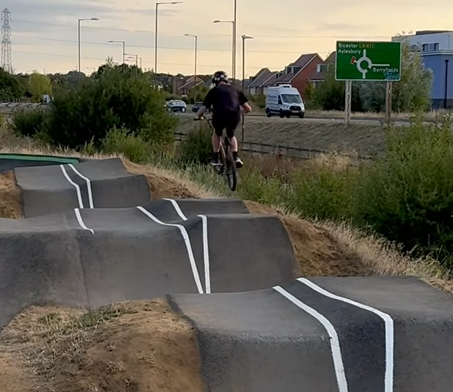
One of the most exciting additions to a pump track is a jump line. Think of a jump line as a row of shaped humps, a bit like a series of small ramps lined up one after another. Beginners can simply roll over them as if they were bigger rollers, while confident riders can use the same shapes to take off into the air.
- Tabletop jumps look like a little hill with a flat top. This design is forgiving — if you don’t take off, you just roll safely across the flat section.
- Hip jumps are built at an angle, letting skilled riders take off in one direction and land facing another, a bit like changing lanes mid-air.
Jump lines give variety to a track and keep it interesting for riders of different abilities.
Drop-ins
A drop-in is a simple but important feature: a raised starting point with a slope down into the track. Imagine a child at the top of a playground slide — gravity does the work of getting them moving. In the same way, a drop-in gives riders an easy way to build speed before they hit the first roller or berm. For nervous beginners, this makes starting much less intimidating.
Waiting and resting areas
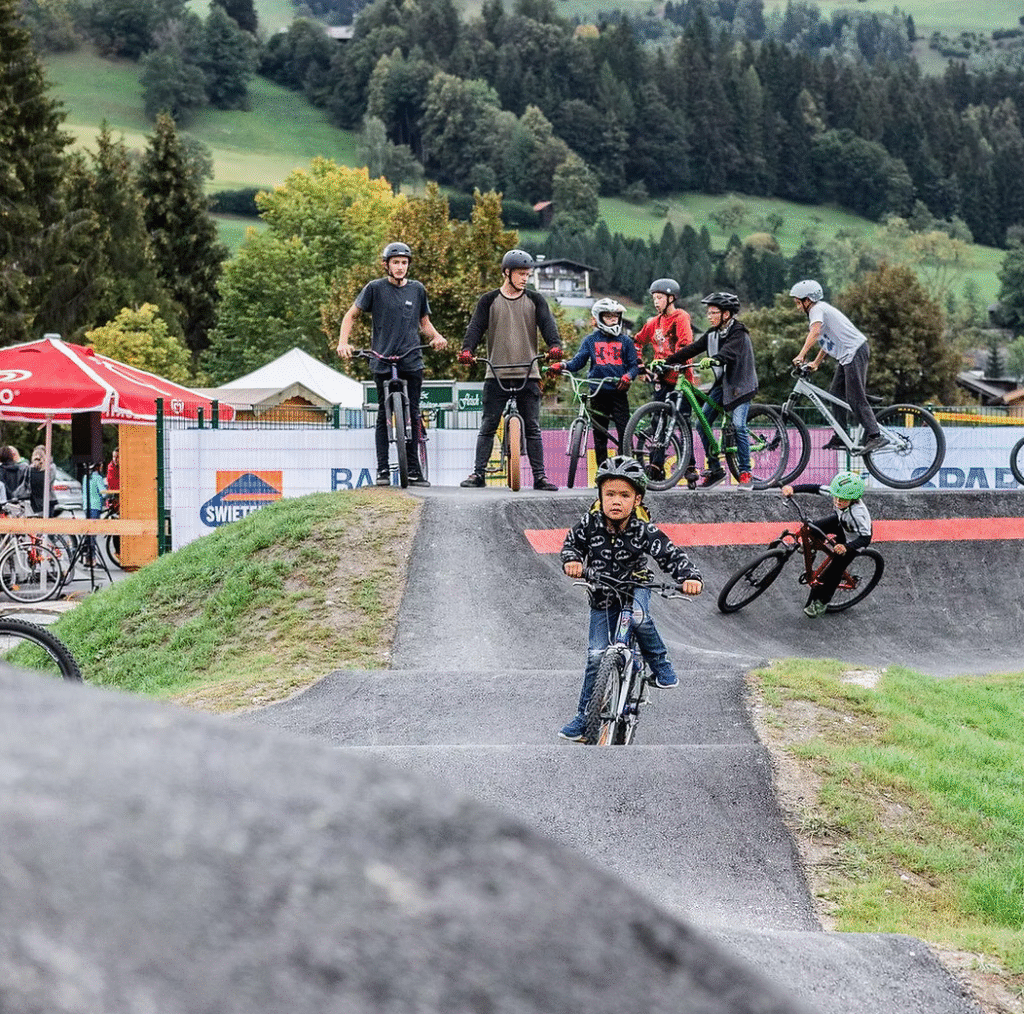
Pump tracks naturally become social spaces, with riders taking turns. That means good waiting areas are essential. These are small widened zones at the edges of the track where riders can stop, catch their breath, or wait for a clear run without blocking the main track.
Often these areas include benches or shaded seating where friends and families can watch. This turns the pump track from a sports facility into a community gathering place, where riders encourage one another and spectators can enjoy the action.
Skate bowls and crossover features
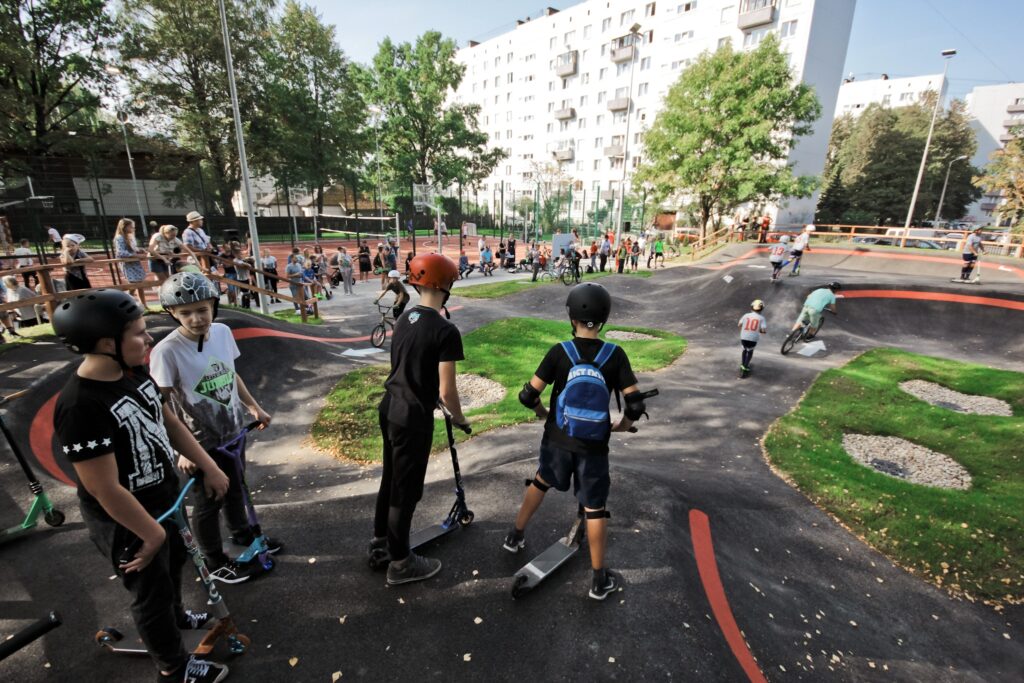
Some tracks include features borrowed from skate parks. These add variety for skateboarders and scooter riders and give the whole facility a crossover appeal.
- A skate bowl looks like a shallow, curved dish — a big, smooth hollow in the ground. Riders can drop into the bowl, swoop up and down the sides, and practice flowing turns. It adds variety and appeals especially to skateboarders and scooter riders.
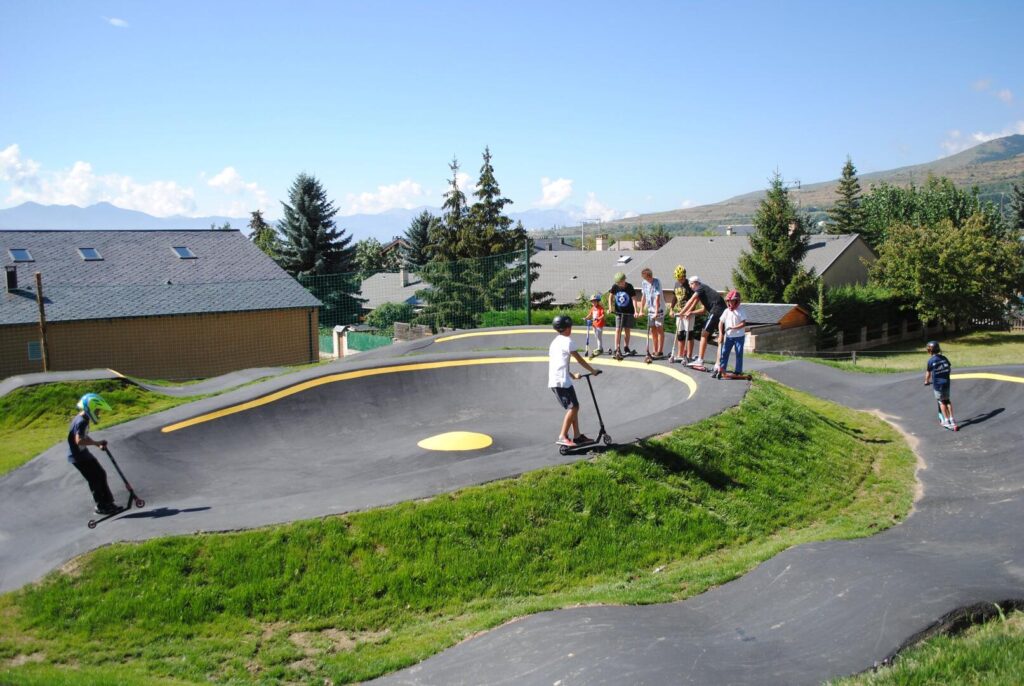
- A wall ride is a steep, sometimes nearly vertical wall that riders can ride partway up, using their speed and momentum. It’s dramatic to watch and gives advanced riders a fun challenge.
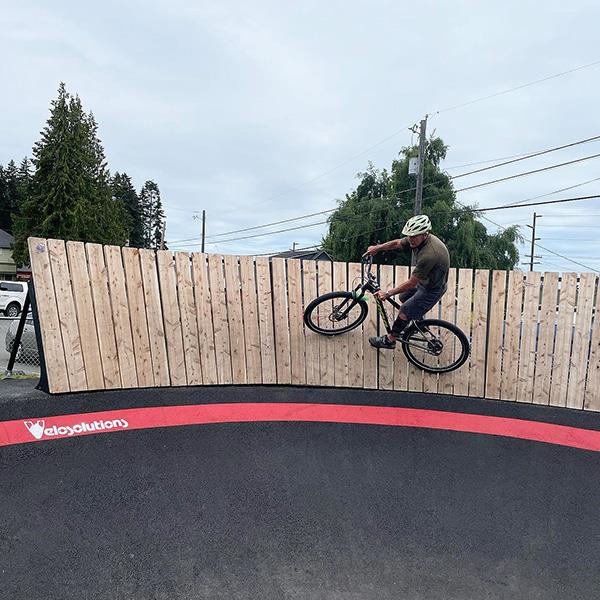
- Street elements such as grind rails or ledges can also be included, giving skateboarders and scooter riders familiar features to practice balance and tricks.
Not every pump track has these, but including them makes the facility attractive to a wider mix of wheeled sports.
Transfer lines
On a basic pump track, you follow the main loop. But more advanced tracks add transfer lines — shortcuts or diagonal paths that connect one loop to another. Imagine a board game where you can move sideways instead of always following the main path: suddenly the possibilities multiply. They give advanced riders the chance to be creative, mixing and matching different parts of the track. It keeps the experience fresh and makes sure the track can grow with the skills of its users.
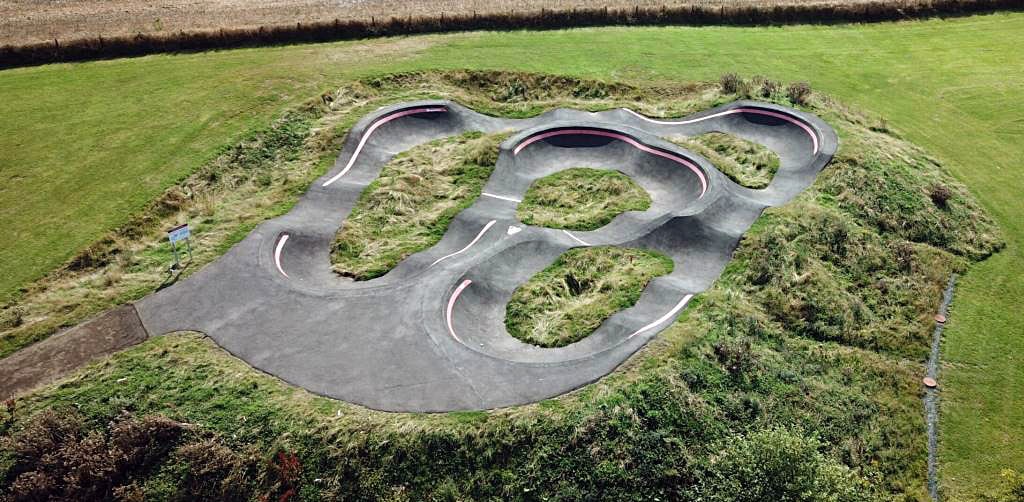
Zones for all abilities
To keep a pump track welcoming, designers often create progression zones — so people can start simple and grow into more advanced riding.
- A beginner zone might have gentle rollers spaced far apart, perfect for young children or first-timers.
- An intermediate zone could have tighter turns and slightly steeper rollers.
- An advanced zone might feature bigger jumps, wall rides, or transfers.
By placing these zones side by side, everyone — from a toddler on a balance bike to a teenager practicing tricks — can enjoy the same facility together.
Beyond the track itself
Finally, a great pump track isn’t just about the riding surface. Thoughtful extras can make a big difference.
- Lighting makes the track usable in the evening, and can also mark a natural ‘end of play’ when it’s switched off.
- Landscaping with trees, flowers, or grass to soften the look, make it inviting and address biodiversity impacts.
- Spectator zones with benches or grassy banks where families can sit.
These extras help transform a pump track from just “a place to ride” to a true community space – somewhere to relax, watch and connect with others.
What about in Histon & Impington?
Exactly which of these features might appear here will depend on the space chosen and the priorities of the community. The Pump Track Charity trustees are committed to open consultation, listening to local voices to design something that balances challenge with safety, fun with accessibility. The aim is to build a pump track that its users have had a hand in shaping, alongside creating a welcoming community space.