In our last two articles we covered the main features of a pump track, along with extras that make a track shine. We touched on materials briefly, but this is an area worth a deeper look. Tracks can be built in several different ways, each with its own character. Asphalt, dirt, concrete, and modular panels all offer different riding experiences, costs, and levels of upkeep. This article looks at the main options, their pros and cons, and what they might mean for a track in Histon & Impington.
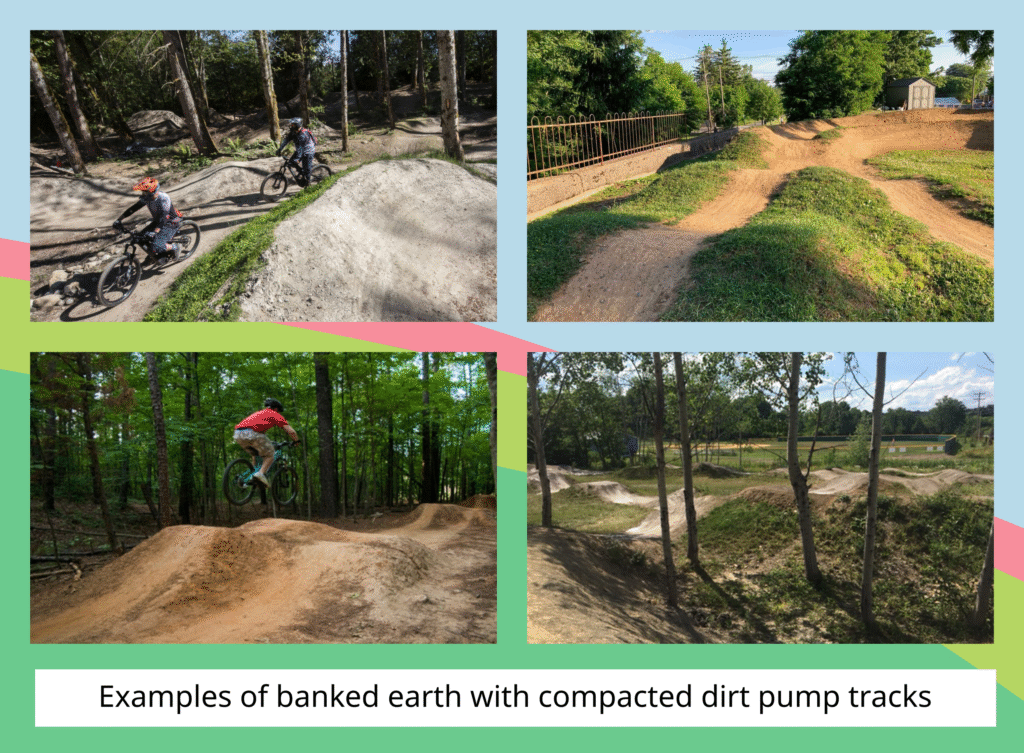
Banked Earth with Compacted Dirt
This is the cheapest option both financially and in terms of embedded carbon, since most of the material is sourced locally. A dirt track can be built with little more than a shovel and determination. Unofficial examples have appeared around the village, dug by young people over the years—though these rarely last, as riders are often moved on and their work undone.
The drawbacks are significant. Dirt surfaces wear quickly under rain and regular use, so constant maintenance is required. They are also the least versatile, typically suitable only for cycles, as rough surfaces, loose patches and narrow track widths limit use for others.
Banked Earth with Asphalt Surface
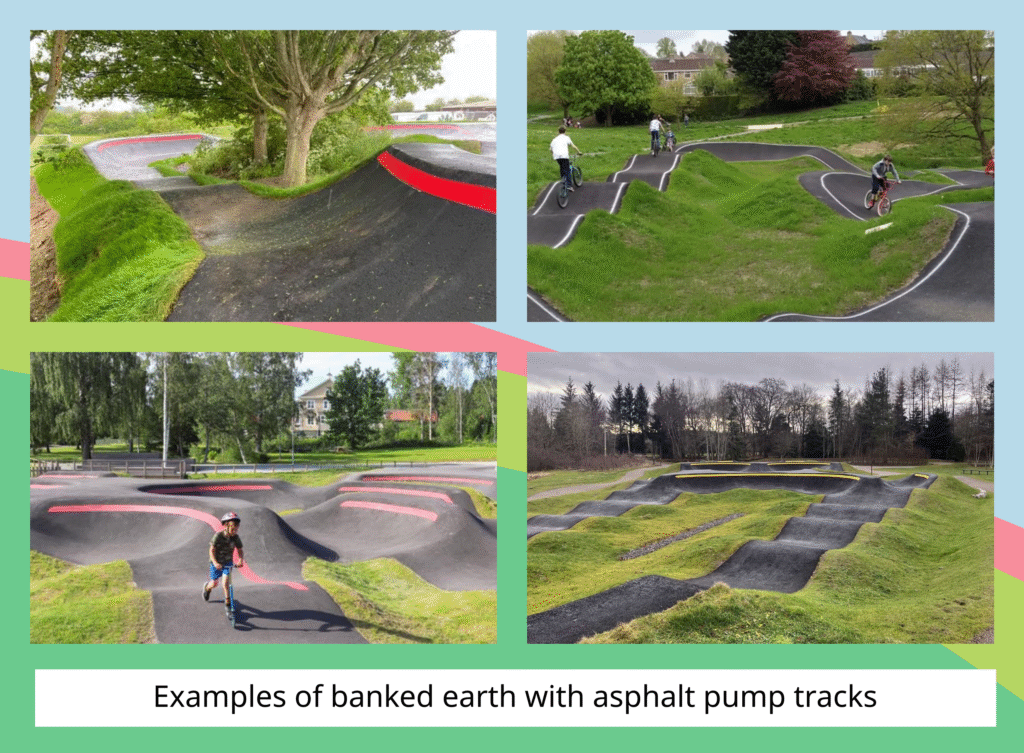
An asphalt surface adds cost and embedded carbon (from heating and processing) but greatly improves durability. Contractors typically offer 10-year warranties, with lifespans of 15–20 years before major repairs are needed. Asphalt creates the smoothest ride of all options and supports the widest range of wheeled sports.
Because rainwater runs off the surface, it’s important to include permeable areas between loops—using pebbles, sand, or planting—to allow drainage. Construction is faster and cheaper with machinery, though in locations with limited access, volunteers have been known to wheelbarrow asphalt from truck to site.
Landscaping Considerations
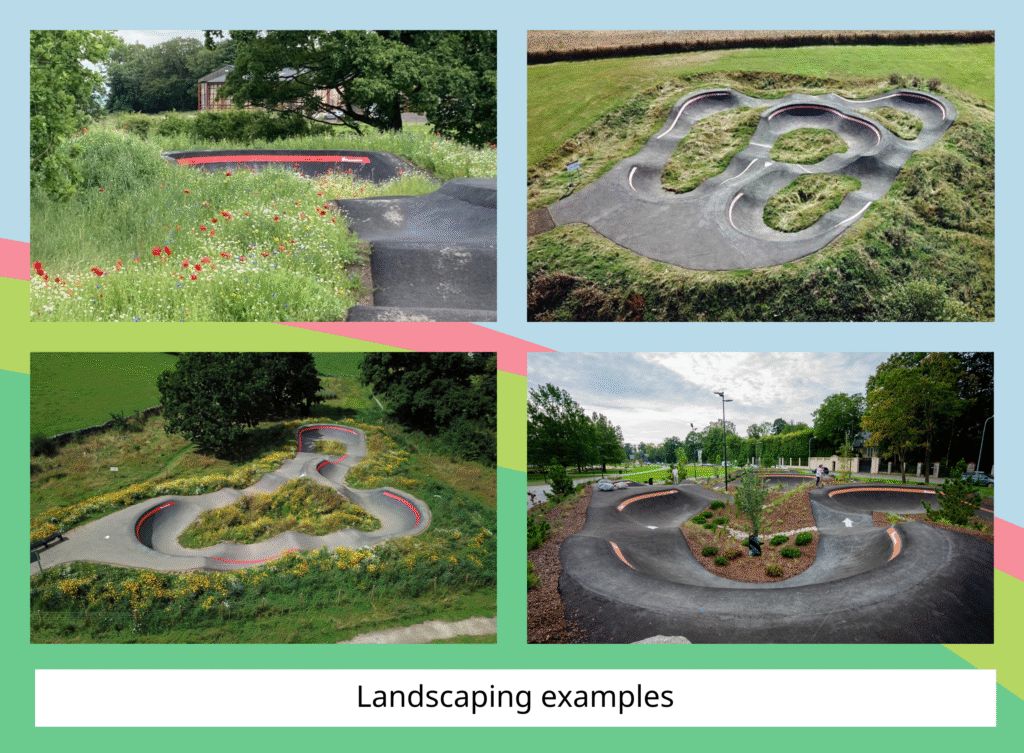
For both dirt and asphalt tracks, greenery should be kept away from the riding surface but is encouraged on the earth banking. In a formal park, grass may tie in with existing playing fields. In more natural settings, scrub, heather, or ferns may be appropriate. Increasingly, wildflower seed
mixes are used to add colour and provide habitat for pollinators.
Wooden Structures
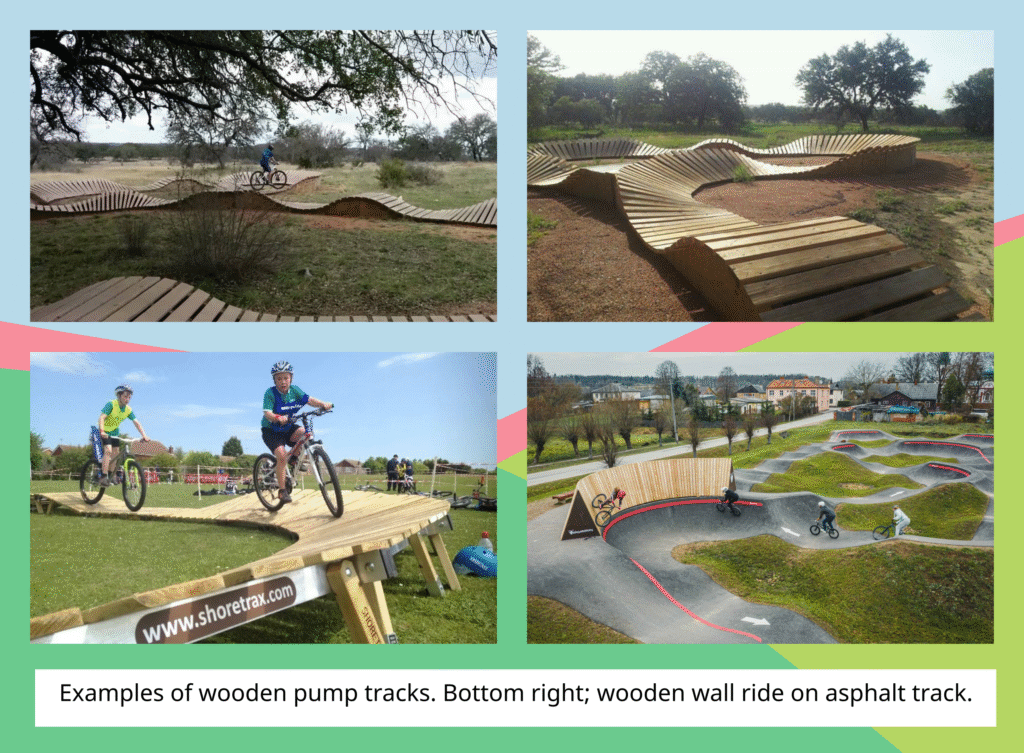
Many early pump tracks were built from wooden frames with slatted riding surfaces. This was once a cheap option where timber was abundant, though costs have risen in recent years. Wood has the advantage of overlaying existing terrain without excavation, but it requires regular checks for rot.
The gaps between planks can make the ride rough, and smaller-wheeled users (skateboards, scooters, inline skates) often find it difficult. Wet boards also become slippery. For these reasons, wood is now more commonly used for individual “feature” elements such as wall rides rather than for entire tracks.
Concrete
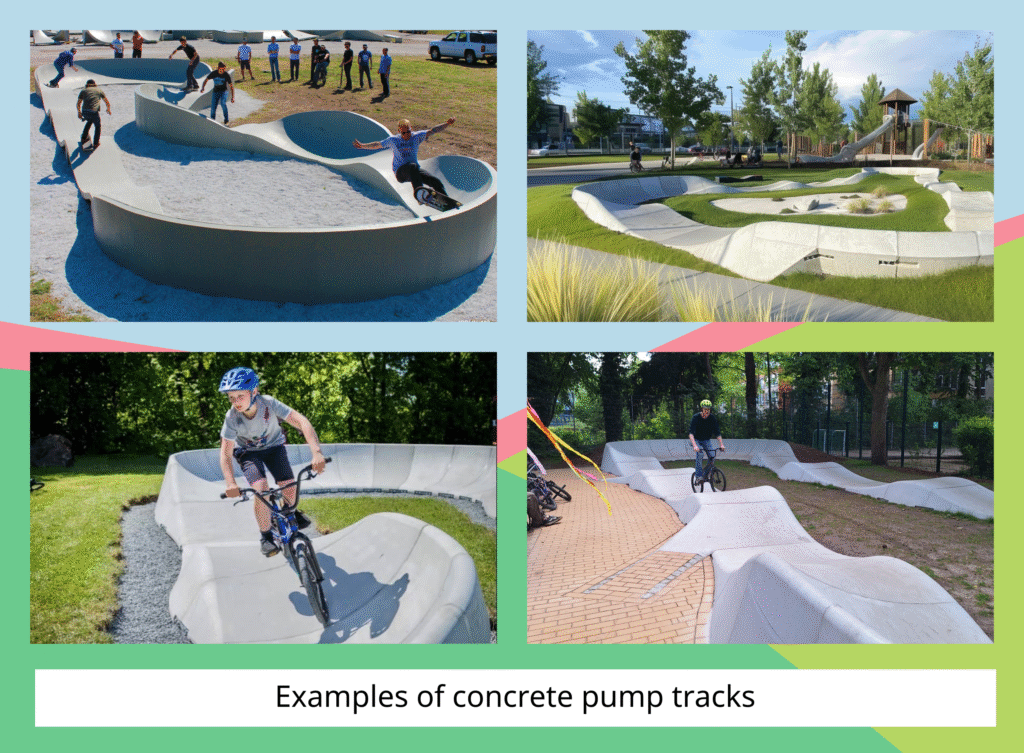
Pre-cast concrete sections can be installed quickly and provide a riding experience comparable to asphalt. These are often used to retrofit pump tracks into paved areas. Concrete is extremely durable and low-maintenance, but it creates a harder, more urban aesthetic since it doesn’t blend easily with planted ground.
It is also less flexible for site-specific design, and the joints between sections can be uncomfortable for some riders. The upside is robustness: a concrete track can, if necessary, be relocated. The downside is its high embedded carbon, higher than asphalt both because of cement production and the larger material volume required (both surface and structure).
Modular Metal and Fibreglass
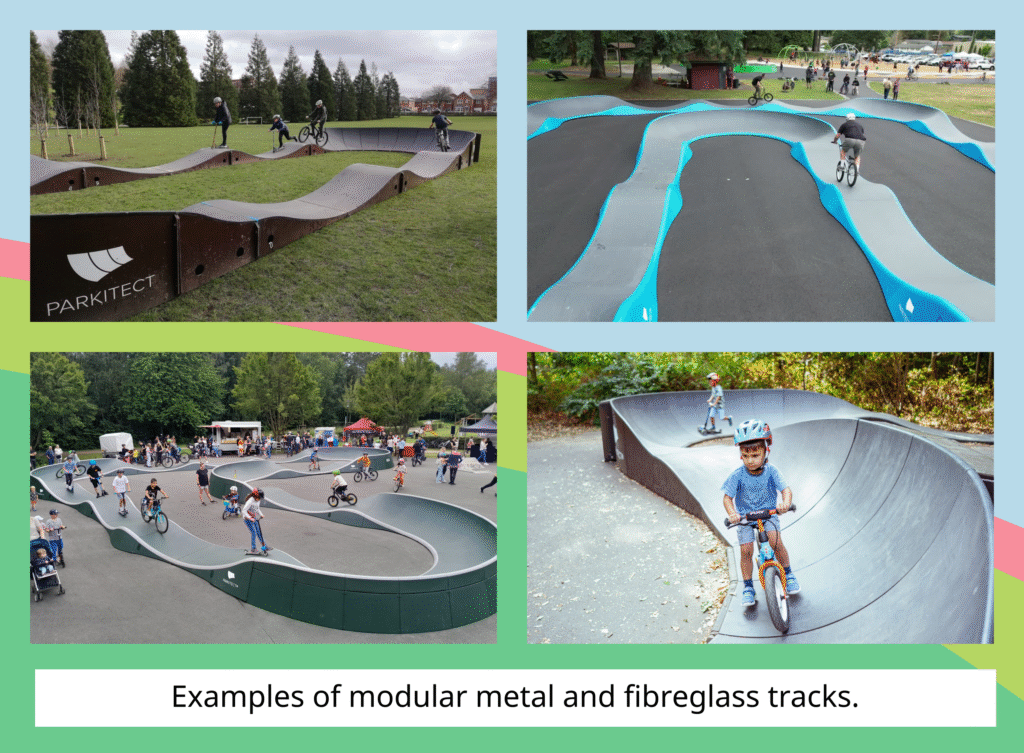
This option uses prefabricated sections with a metal frame and fibreglass surface. It allows for very quick installation and is often chosen for temporary event tracks. Fibreglass is durable and weather-resistant, but like concrete it gives a harder, less natural look and offers limited flexibility to adapt to a particular site.
What about in Histon & Impington?
Each method has merits, and several could work well for a track in Histon & Impington. The Charity is currently advocating for banked earth structure with asphalt surface, as offers the best balance of cost (both financial and carbon) and long-term durability. Asphalt delivers a smooth, low-maintenance surface that supports the widest range of wheeled sports, promoting inclusivity while keeping ongoing costs down. We also feel that earth banking also allows the track to best blend into its surroundings, providing opportunities for landscaping and planting. Nevertheless, the choice should remain open to discussion during the design and consultation process.